The Gateway Drug: How Lupin III Quietly Paved the Road That Every Anime Western Crossover Walks Today
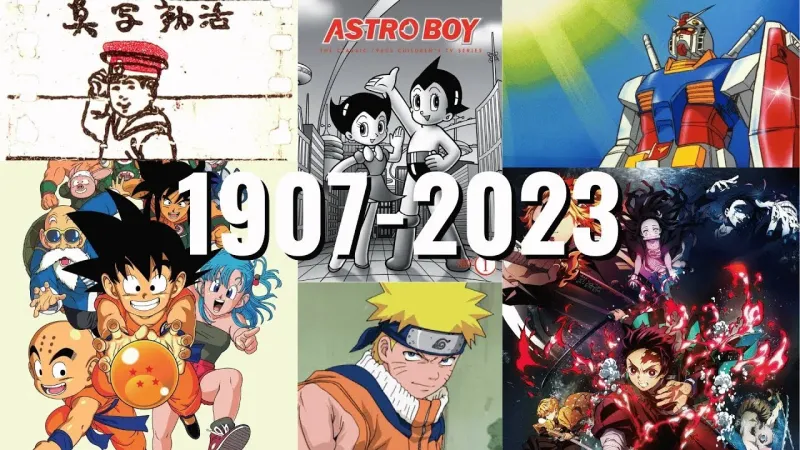
Photo: anime streaming evolution timeline retro to modern television screens collage, via i.ytimg.com
If you want to understand how anime went from a niche import curiosity to a genuine pillar of American pop culture, you have to start somewhere most people overlook. Not with Dragon Ball Z's Toonami debut. Not with Pokémon's cultural detonation in 1998. You have to start with a wiry thief in a yellow jacket and his increasingly chaotic crew of specialists.
Lupin III's influence on anime's westward journey is one of those stories that gets undersold because it happened gradually, without a single dramatic moment you can point to. But pull on the thread and you'll find it running through a remarkable amount of what made anime legible — and lovable — to American audiences.
The Episodic Structure That Lowered the Barrier to Entry
One of the biggest friction points for American viewers discovering anime in the pre-streaming era was continuity. Long-running shonen series demanded enormous time investment. You couldn't just drop in on episode 200 of something and have any idea what was happening. That was a real obstacle for casual viewers who weren't ready to commit.
Lupin III solved this problem before it was even recognized as a problem. The franchise's core structure — self-contained heist episodes with recurring characters but minimal serialization — made it remarkably accessible. You could watch any episode of the original series or the classic TV specials without homework. The characters were consistent, the stakes were clear, and the fun was immediate.
This format turned out to be enormously influential. When you look at the anime titles that successfully crossed into Western mainstream consciousness — Cowboy Bebop being the obvious example — that episodic accessibility is almost always part of the equation. Bebop's creators have explicitly acknowledged Lupin III as a foundational influence, and you can see it in the structure: a crew of specialists, self-contained episode plots, a tone that blends action with comedy and genuine emotional weight. That's the Lupin formula.
Ranking the Ways Lupin III Shaped the Western Crossover Blueprint
Let's actually put a hierarchy on this, because not all of Lupin's contributions are equal.
1. The Accessible Entry Point Model This is the biggest one. Lupin III demonstrated that anime didn't have to be a commitment to be compelling. The franchise proved you could build deep, beloved characters while still telling stories that welcomed newcomers at any point. Every anime that has successfully crossed over to Western audiences since — from Trigun to One Punch Man to Spy x Family — has leaned on some version of this principle.
2. The Genre Blending Approach Lupin III refuses to be just one thing. It's a heist show. It's a comedy. It's occasionally a surprisingly tender character study. It can be campy and then, twenty minutes later, genuinely suspenseful. This tonal flexibility was unusual for its era and it mapped perfectly onto American genre expectations — we love stuff that doesn't fit cleanly into a box. The franchise essentially taught a generation of anime creators that mixing registers wasn't a bug, it was a feature.
3. The Cinematic Ambition of the Films Castle Cagliostro — which we've written about extensively here at Cagliostro Castle, naturally — showed American audiences that anime could operate at a genuinely cinematic level. The visual storytelling, the action choreography, the environmental detail: it was a proof of concept that anime wasn't just a cheaper alternative to American animation. It was doing things Western animation wasn't doing. That perception shift mattered enormously for everything that came after.
4. The Character Dynamics That Feel Universal Lupin's crew — the loyal gunman, the samurai with a code, the femme fatale with her own agenda — are archetypes that translate across cultures. American audiences didn't need a cultural decoder ring to understand what Jigen and Goemon were about. That universality was part of why the franchise traveled so well, and it influenced how subsequent creators built their ensemble casts when they wanted to reach international audiences.
5. The Villain-as-System Framing Lupin almost never fights a villain who's just personally evil. His antagonists are usually corrupt systems, exploitative institutions, or concentrated power hiding behind legitimacy. That framing — the thief as a corrective to systemic rot rather than just a rule-breaker — gave the franchise a political edge that resonated with American counterculture sensibilities and continued to influence how anime handles its antagonist structures.
The Streaming Era and Lupin's Continued Relevance
Here's what's interesting about Lupin III's influence in the current moment: it's not just historical. The 2015 series and Part 5 and Part 6 demonstrated that the franchise could adapt to contemporary streaming expectations — longer arcs, more serialized storytelling, engagement with real-world themes — without losing the core accessibility that made it work in the first place.
That adaptability is itself instructive. The franchise modeled something important: you can evolve your format without abandoning your identity. That's a lesson you can trace in the DNA of successful modern anime crossovers. Shows like Spy x Family or Dungeon Meshi have found Western audiences by being genuinely flexible in structure while staying true to their core appeal. That's the Lupin approach.
The Legacy That Doesn't Get Enough Credit
When people talk about anime's mainstream breakthrough in America, the conversation usually starts in the late '90s. And fair enough — that era was transformative. But the groundwork was laid earlier, messier, and more quietly than the Dragon Ball Z narrative suggests.
Lupin III was in American living rooms via home video and late-night cable long before anime was a recognized category. It was winning over viewers who didn't even know they were watching anime. It was demonstrating, through sheer entertainment value, that the medium could do things worth caring about.
Every anime creator who's successfully crossed over to Western audiences has, whether they know it or not, benefited from the path Lupin III helped clear. That's a legacy worth taking seriously — even if the guy who built it would rather steal the credit and disappear into the night.