Steal From the Rich, Wink at the Camera: How Lupin III Stacks Up Against History's Most Beloved Outlaws
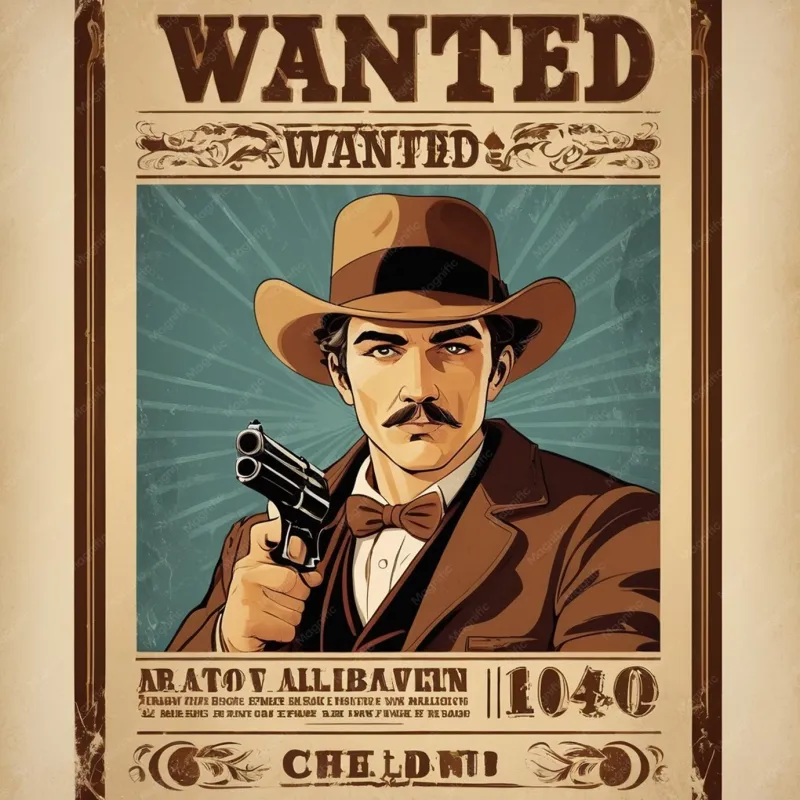
Photo: vintage outlaw folk hero wanted poster retro illustration, via img.freepik.com
There's a reason we root for Lupin III even though, let's be honest, the guy is a professional criminal. He lies, he manipulates, he breaks into places he has absolutely no business being inside. And yet somewhere between the smirk and the getaway car, we're cheering him on. That's not an accident — it's the product of a very carefully constructed moral identity that the franchise has been building since the late 1960s.
But here's the thing: Lupin didn't invent that formula. History is full of outlaws who managed to earn the public's sympathy, sometimes even their adoration, by threading a similar needle. The question worth asking is how Lupin's fictional principles actually compare to the real deal — and whether the romanticized version of the gentleman thief holds up under scrutiny.
The Robin Hood Problem
Before we get into specifics, it's worth acknowledging the obvious elephant in the room: Robin Hood himself is almost certainly fictional, or at least so heavily mythologized that separating the man from the legend is basically impossible at this point. What Robin Hood represents, though, is very real — the idea that stealing from the powerful to give to the powerless can be a morally defensible act.
Lupin III borrows from that tradition heavily. He targets the corrupt, the greedy, and the powerful. He rarely goes after ordinary people. He has a strict personal code about not hurting innocents. Sound familiar? The difference is that Lupin doesn't exactly redistribute his hauls to the downtrodden masses on a regular basis. He keeps a lot of the loot. That's an important distinction, and it's one that separates him from the purest version of the Robin Hood archetype.
So if he's not quite Robin Hood, what is he?
Jesse James and the Myth-Making Machine
A closer historical parallel might be Jesse James — not the actual Jesse James, who was genuinely violent and not particularly interested in helping the poor, but the mythologized Jesse James that Americans constructed after his death. Dime novels, folk songs, and later Hollywood films turned a brutal outlaw into a kind of folk hero who robbed from Yankee banks and railroads on behalf of struggling Southern farmers.
The real man barely matched that story. But the idea of Jesse James tapped into genuine public resentment toward Reconstruction-era financial institutions and the railroad monopolies that were squeezing rural communities. People wanted a champion, and they retrofitted James into that role whether he earned it or not.
Lupin operates in a similar space, except the franchise is self-aware about the construction. The show knows it's selling you a romantic version of a thief. It winks at you about it constantly. Where the Jesse James myth required decades of revisionist storytelling after the fact, Lupin's mythology is built into the text from the start.
Ned Kelly's Armor and the Importance of Spectacle
Australia's most famous outlaw, Ned Kelly, offers another interesting comparison. Kelly was a genuine rebel who came from a marginalized Irish immigrant family and spent much of his criminal career framing himself as a freedom fighter against corrupt colonial police. His famous armored suit — cobbled together from farm equipment — became an iconic image of defiance that still resonates in Australian culture today.
What Kelly understood, and what Lupin III embodies completely, is that spectacle matters. The armor wasn't just practical protection. It was a statement. It said: you can't stop me, and I'm going to make sure everyone knows it. Lupin's elaborate heist setups, his theatrical disguises, his tendency to leave calling cards before a job — these serve the same symbolic function. They transform crime into performance, and performance into myth.
The difference is that Kelly's rebellion ended in a shootout and a hanging. The spectacle ran out of road when it collided with real consequences. Lupin, blessed with the invincibility of fiction, never has to face that reckoning.
Zorro, the Gentleman Thief Template, and Where Lupin Fits
If we're being precise about lineage, Lupin III probably owes more to Zorro and Arsène Lupin (his namesake, obviously) than to any historical outlaw. Both of those fictional predecessors codified the "gentleman thief" archetype: wealthy or at least well-resourced, operating by a personal code of honor, targeting corrupt authority figures, and maintaining a kind of theatrical flair that makes them more folk hero than common criminal.
What makes Lupin III interesting is that the franchise complicates this template in ways the source material often didn't. Lupin isn't always noble. He's petty sometimes. He gets distracted by beautiful women. He makes selfish choices. He occasionally fails. That messiness is actually what makes him feel more honest than the purely idealized versions of the archetype — and paradoxically, it makes him easier to root for.
The Line Lupin Doesn't Cross
Here's where the franchise genuinely earns its sympathetic framing: Lupin has a hard line around certain kinds of harm that he simply won't cross. He doesn't hurt innocents. When a heist threatens to put ordinary people at risk, he pivots. When a villain turns out to be genuinely monstrous, Lupin frequently ends up being the one to stop them — often at personal cost.
Real historical outlaws, even the sympathetic ones, rarely maintained that kind of consistency. Billy the Kid killed people who probably didn't deserve it. Butch Cassidy and the Sundance Kid, for all their charm, were still robbing banks that real working people depended on. The Robin Hood standard — genuinely helping the vulnerable while only targeting the corrupt — is incredibly hard to maintain in practice, which is part of why real-life examples of it are so rare and so heavily mythologized.
Lupin manages to stay on the right side of that line because he's fictional, yes, but also because the franchise has always been deliberate about where it draws the moral boundaries. That intentionality is what separates him from being a power fantasy and keeps him in the territory of something more like a folk hero.
Why It Still Works in 2025
American audiences in particular seem to have an enduring appetite for the lovable outlaw figure — from Jesse James to Tony Soprano to Walter White. We like watching people break rules, especially when those rules feel rigged. Lupin III feeds that appetite while keeping one foot firmly in the tradition of the moral rebel: someone who breaks the law, but not the spirit of fairness.
That's a tightrope walk that history shows is almost impossible to pull off in real life. The outlaws who tried usually ended up either becoming genuinely dangerous or getting mythologized beyond recognition after the fact. Lupin III threads the needle because fiction allows for a kind of moral precision that reality never does.
And honestly? That's probably why we keep coming back to him. In a world where the powerful rarely face consequences, there's something deeply satisfying about a thief with a code — even if that code only exists in the pages of a manga and the frames of an anime.