Dressed to Steal: What Lupin III's Outfits Actually Tell Us About the Franchise
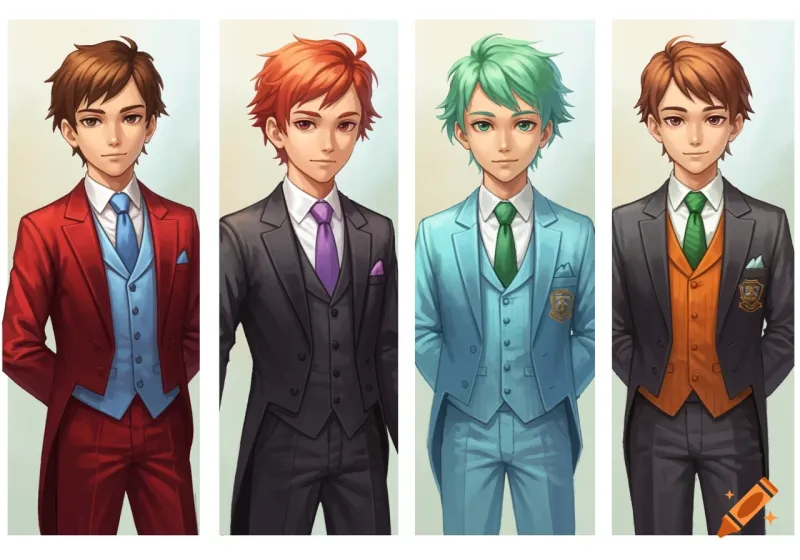
Photo: colorful vintage anime style fashion illustration suits jackets, via media.craiyon.com
There's a moment every new Lupin III fan goes through. You're watching an episode or a film, and someone drops a reference — maybe online, maybe in conversation — to "the red jacket era" or "the green jacket version." And suddenly it clicks: Lupin's wardrobe isn't just costume design. It's a filing system. A mood board. A signal flare telling you exactly what kind of story you're about to get.
For a franchise that's been running since 1967, that's a genuinely elegant piece of visual storytelling. So let's actually dig into it — not just name the colors, but figure out what those clothes mean.
The Green Jacket: Chaos as a Fashion Statement
The original manga and the first TV series introduced Lupin in a green jacket, and that choice wasn't accidental. Green Jacket Lupin — the version most associated with the early Monkey Punch run and the 1971 anime — is the roughest, most unpredictable take on the character. He's dangerous, morally ambiguous, and genuinely kind of scary sometimes. The green feels earthy and slightly off-kilter, like something you'd find at a flea market that turns out to be worth a fortune.
For American audiences discovering this era through streaming or physical releases, the green jacket version can be a genuine shock. This isn't the charming rogue from Castle of Cagliostro. He's sharper, colder, and the humor cuts a little deeper. The clothes match the vibe perfectly — there's nothing polished about that jacket.
The Red Jacket: The Version That Conquered the World
Ask a casual American anime fan to picture Lupin III, and nine times out of ten, they're picturing the red jacket. This is the Part II era, the version that dominated Japanese television through the late '70s and early '80s, and the one that most international audiences encountered first through various regional broadcasts and home video releases.
The red jacket Lupin is warm, theatrical, and almost cartoonishly confident. The color itself does so much work — red reads as bold, romantic, and a little reckless. This version of Lupin is at his most swashbuckling. The tone of Part II leans heavily into adventure-of-the-week storytelling, globe-trotting capers, and a kind of breezy optimism that the green jacket era never quite had. Wearing red is essentially Lupin announcing, "I'm the hero of this story, and we're all going to have a great time."
It's also worth noting that the red jacket era includes The Castle of Cagliostro — Miyazaki's film that introduced countless Western viewers to the franchise. That movie's Lupin is arguably the most heroic version of the character ever put to screen, and the red jacket fits that interpretation like a glove.
The Pink (Salmon) Jacket: The Underdog Era
Here's where things get interesting. Part III, which aired in 1984, gave Lupin a pink — or depending on your monitor, salmon — jacket, and the fandom has never fully agreed on what to make of it. The series itself was a softer, more comedic run that leaned into slapstick and lighter stakes. The pink jacket reflects that energy: it's less threatening, more playful, almost self-deprecating.
American fans tend to be divided on this era. Some love it precisely because it's the goofiest, most purely fun version of the show. Others find it a bit toothless. But the jacket tells you everything upfront. Pink isn't intimidating. Pink is a character who's okay with being the butt of the joke sometimes. There's something genuinely charming about that honesty.
The Blue Jacket: Maturity Looks Good on a Thief
Part IV and Part V, the more recent entries in the franchise, brought Lupin into a blue jacket, and the shift signals a real tonal evolution. Blue reads as sophisticated, reflective, and slightly melancholy — and those qualities show up all over the newer series. Part IV is set in Europe, engages more seriously with Lupin's mythology and past, and gives supporting characters like Fujiko and Goemon more complex arcs. Part V goes even further, interrogating what it means to be a legendary thief in the age of social media and surveillance capitalism.
For American fans who came into the franchise through the older material, the blue jacket era can feel like a pleasant surprise — proof that the series has genuine depth and isn't just coasting on nostalgia. The outfit signals that Lupin has, in some sense, grown up. Not softened, not retired, but genuinely evolved.
The Yellow Jacket: A Franchise Talking to Itself
Part VI brought a yellow jacket into the mix, and at this point the franchise is clearly aware of its own color-coding system. Yellow is bright and attention-grabbing, but it's also slightly anxious — like someone who wants to be noticed but isn't sure they've earned it yet. The series itself plays heavily with the franchise's legacy, featuring crossovers and meta-references that reward longtime fans.
It's a jacket that says, "We know you've been keeping track."
Beyond the Jacket: The Details That Seal the Deal
The jackets get all the attention, but Lupin's full wardrobe is doing constant storytelling work. The tie — always loosened just slightly — signals that he's technically dressed for the occasion but refuses to be fully contained by it. The driving gloves that appear in certain eras suggest a character who's always ready to make a quick exit. Even the cut of the trousers changes between iterations, shifting from the wider, more casual silhouettes of the '70s to sleeker contemporary fits in recent series.
Accessories matter too. The pistol holster placement, the hat in certain films, the occasional sunglasses — these details reward attentive viewers and give costume designers and animators a toolkit for telegraphing character state without a single line of dialogue.
Why This Matters to American Audiences
In a franchise this sprawling, visual shorthand is genuinely useful. American fans — many of whom encounter Lupin III out of sequence, through streaming platforms that mix eras or recommendation algorithms that surface random episodes — use the jacket color as an orientation tool. It's a way of asking, "What am I getting here?" before the story even starts.
That's pretty remarkable for a piece of clothing. Most franchises struggle to create that kind of immediate visual language. Lupin III built it almost by accident over five decades, and now it's one of the most elegant pieces of franchise identity in all of anime.
Next time you queue up an episode and see that first shot of Lupin's jacket, take a second before the action starts. The outfit is already telling you a story.